


Lonafarnib for chronic hepatitis delta
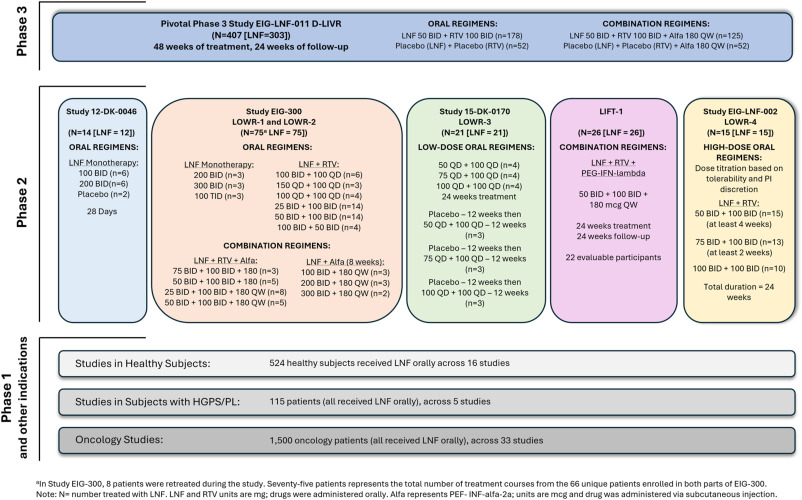
Lonafarnib for chronic hepatitis delta: Clinical mechanism of action, development, and evolving role in combination therapy
Hepatitis D virus (HDV), the smallest known human RNA virus, is a defective, satellite virus that requires hepatitis B virus (HBV)-derived surface antigen (HBsAg) proteins for virion assembly and entry (Gopalakrishna et al., 2024). HDV superinfection occurs when a person with existing HBV infection subsequently becomes infected with HDV, resulting in the most severe form of chronic viral hepatitis, accelerating progression to cirrhosis, hepatic decompensation, hepatocellular carcinoma (HCC), and death (Gopalakrishna et al., 2024). Coinfection of HBV and HDV, ie, simultaneous infection, can result in fulminant hepatic failure, although most infected individuals can clear both HBV and HDV, if infected as adults. The original discovery of delta antigen in HBsAg carriers, and subsequent characterization of the delta agent as an RNA-containing particle associated with HBsAg, established HDV as a distinct viral pathogen dependent on HBV envelope proteins (Rizzetto et al., 1977, 1980). While HDV can replicate its genome autonomously inside the hepatocyte, the virus requires HBsAg, rather than complete HBV replication, to complete virion assembly and to facilitate transmission.