


Hep D Virus Infection on Health-Related Quality of Life and Fatigue
The Impact of Chronic Hepatitis D Virus Infection on Health-Related Quality of Life and Fatigue: A Real-World International Study
ABSTRACT
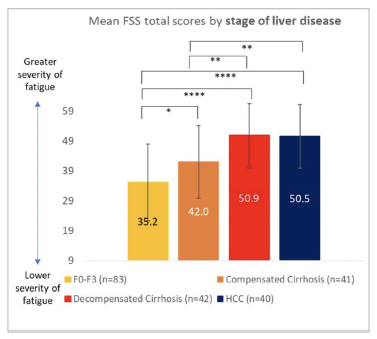
As little is known about the disease burden of chronic hepatitis D virus (HDV) infection, this study examined health-related quality of life (HRQoL) and fatigue at different disease stages. This was a real-world quantitative cross-sectional survey of patients in Germany, Italy, Spain and the USA. Patients were recruited via their treating physicians. Patients who had received bulevirtide for hepatitis B or treatment licensed for HDV were excluded. Of 211 patients, 41% were noncirrhotic (F0–F3); 20% had liver cirrhosis with normal function (compensated); 20% had liver cirrhosis (F4) with impaired function (decompensated); 19% had hepatocellular carcinoma (HCC). Mean (standard deviation; SD) age was 54.5 (11.5) years, 75% were male. ANOVA showed a significant decrease (indicating poorer HRQoL) in EQ-5D-3L visual analogue scale (VAS) scores and index values with worsening disease stage and increasing severity (all p < 0.0001). All domain scores of the Hepatitis Quality of Life Questionnaire v2 (except positive wellbeing) worsened with progressing disease and increasing symptom severity (all p ≤ 0.0001). Mean Fatigue Severity Scale (FSS) total scores also increased, indicating greater fatigue, with worsening of disease and increasing symptom severity (both p < 0.0001). HDV infection significantly impacts patients’ HRQoL and fatigue, particularly for patients at later disease stages. Treatments that slow disease progression, reducing the burden of HDV infection, are needed.